
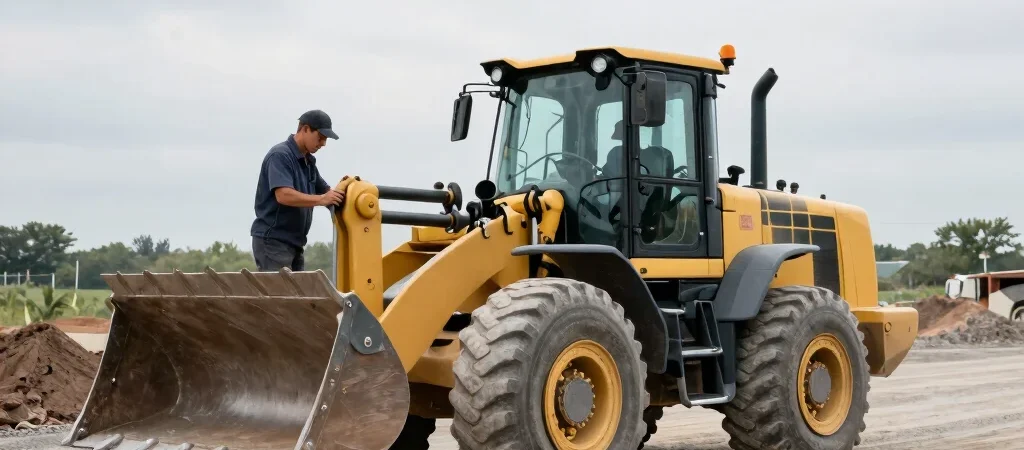
A wheel loader can look ready from the cab while a damaged tire, leaking hose, or loose bucket component is waiting just out of view. A walkaround gives the operator a chance to spot changes before the machine is under load. Use the manufacturer’s pre-start procedure and your site rules as the baseline; the right checks vary by model and attachment.
Start With a Safe Setup
Park on firm, level ground, lower the attachment, engage the parking brake, and follow the machine’s shutdown procedure before inspecting it. If a check requires reaching into a hazardous area or performing maintenance, use the applicable isolation procedure rather than relying on the controls being off. Never go beneath a raised bucket or other unsupported attachment.
Look for Changes and Damage
Scan the ground and the machine for fresh fluid, damaged hoses, loose fasteners, cracked welds, and impact marks. Check tires for cuts, embedded material, and visible changes in inflation, and inspect the bucket edge, teeth, and coupler for wear or damage. Clear debris from screens and cooling-air paths as directed in the operator’s manual, especially after dusty work.
Finish With the Attachment
A bucket, fork, or other attachment changes what deserves attention, so check its condition and connection using the machine’s approved procedure. Confirm that coupler indicators or locking mechanisms show the correct engagement before operating, and investigate any warning light or unusual sound rather than treating it as routine. Record defects and report anything that could affect safe operation.