
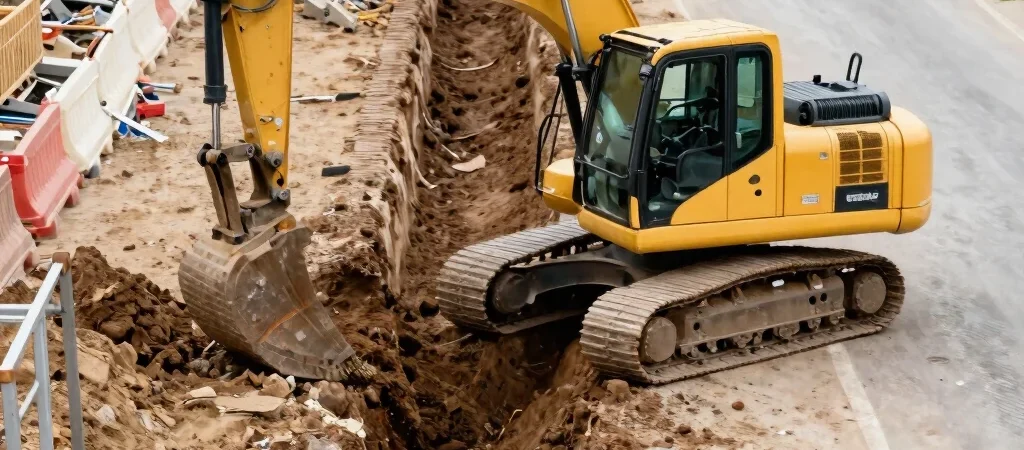
On a tight utility job, the excavator’s reach is only part of the decision. Access width, ground conditions, nearby structures, and the route between work areas can determine whether the machine is practical day after day. Start with the constraints of the site, then compare machines against the work they must actually perform.
Measure the Working Envelope
Check the available access and working space, including room for the counterweight to swing and the boom to reach the required digging area. Reduced-tail-swing designs can help in confined areas, but compare the machine’s published operating limits and lift information for the specific configuration. A compact footprint does not remove the need to plan safe clearance around people, structures, and services.
Match Weight to the Ground
Operating weight affects transport planning and how the excavator interacts with the surface beneath it. Soft ground, slopes, and finished pavement call for different considerations, so assess the route in and the place where the machine will work—not just the excavation point. Confirm transport requirements and any ground-protection measures with the relevant equipment documentation and site plan.
Compare the Whole Job
List the materials, digging depth, reach, lifting tasks, and attachments the job calls for, then check those needs against the manufacturer’s specifications for each candidate. An attachment can affect compatibility, setup, and the available operating range, so verify the exact machine-and-tool combination. The useful choice is the one that can complete the work within the site’s access, safety, and transport limits—not simply the one with the most impressive headline figure.