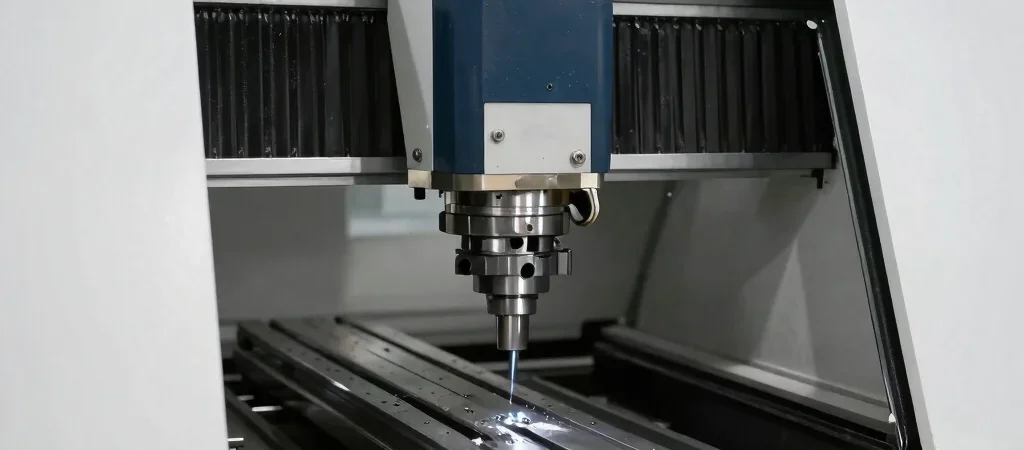
A part may fit inside a CNC machine’s advertised work envelope and still be difficult to machine. Fixtures take up space, tools need clearance, and the cutting sequence may demand access from more than one direction. For a useful comparison, work backward from the part and the process instead of starting with the machine’s biggest specification.
Map the Part and Setup
Record the part’s dimensions, material, required operations, and the way it will be held during cutting. Then account for the fixture, tool length, and clearance needed to reach the features without interference. Ask whether the planned setup fits within the machine’s usable envelope, not just its nominal axis travel.
Match the Cutting Work
Compare spindle characteristics, tool capacity, and supported tooling with the materials and operations in your production mix. A machine used for aluminum housings may face different demands from one cutting tougher alloys or handling frequent tool changes. Check the manufacturer’s specifications for the exact configuration, and make sure the proposed process is within its stated limits.
Plan Beyond the Machine
Workholding, chip removal, coolant management, programming, and operator access all affect how a machine fits into a shop. Consider where stock will be loaded, how finished parts will leave the work area, and what support is available for installation and service. A sound equipment decision connects the machine’s capabilities to the full production process, including the unglamorous steps between cuts.